
See also


 30.07.2026 06:00 AM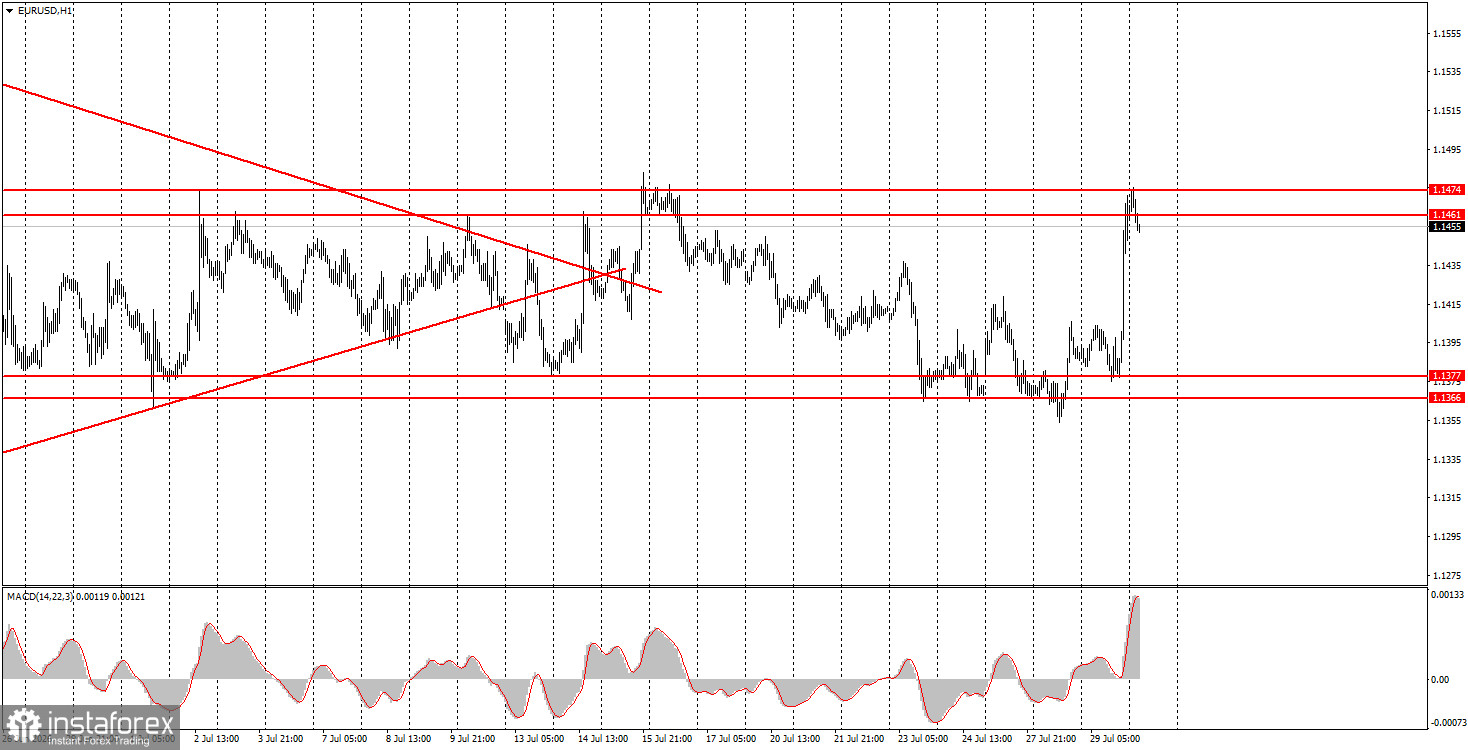
On Wednesday, the EUR/USD currency pair showed a sharp, strong rise from the lower boundary of the sideways channel to the upper boundary. The reason for this sudden surge in the European currency is not hard to guess. Last evening, the Federal Reserve concluded its fifth meeting of the year, predictably keeping the key rate unchanged and providing no signals of future monetary policy tightening. The market, which had firmly expected a rate hike in 2026, was disappointed, resulting in a decline in the US dollar. We had warned that traders would interpret all information from Kevin Warsh in their own way. In simple terms, no specifics may be provided, but each trader will draw their conclusions. Thus, a month and a half ago, we saw the US currency rise, and yesterday—a fall, even though the statements made by Warsh and the decisions taken by the Fed were practically indistinguishable.
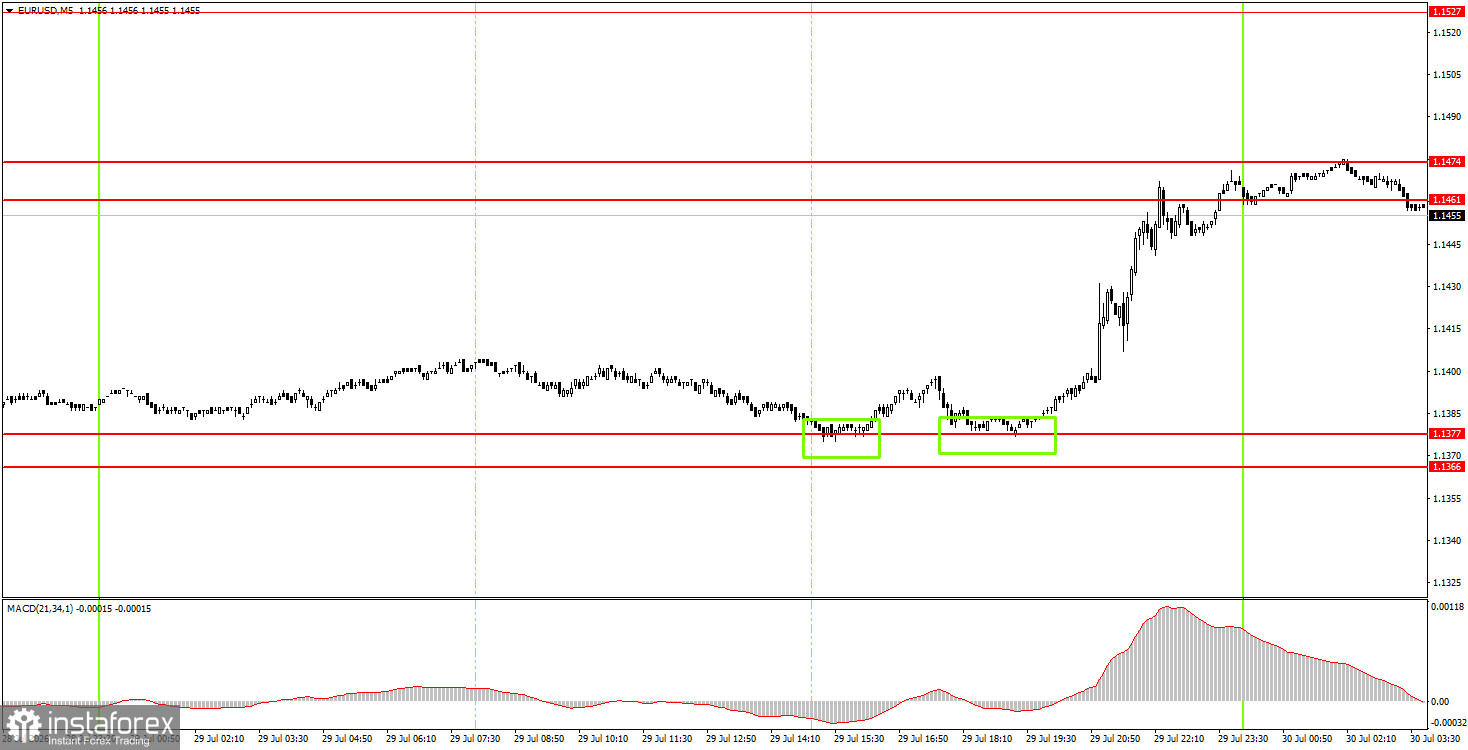
On the 5-minute timeframe, two buy signals were formed on Wednesday. The price bounced twice from the 1.1366-1.1377 area during the American trading session, allowing novice traders to open long positions in advance. By the end of the day, the pair reached the target area of 1.1461-1.1474.
On the hourly timeframe, both trend lines have been broken and are no longer relevant, but the flat persists. Considering all events and market movements over the past months, we believe that the European currency should begin a confident rise. However, in reality, the EUR/USD pair has been trading within the sideways channel for a month, and the market continues to ignore all factors in favor of the euro.
On Thursday, novice traders may open short positions targeting 1.1366-1.1377 if the price bounces from the 1.1461-1.1474 area. New long positions can be opened if the 1.1461-1.1474 area is breached, with a target of 1.1584.
On the 5-minute timeframe, levels to consider include 1.1267-1.1275, 1.1366-1.1377, 1.1461-1.1474, 1.1527-1.1531, 1.1584-1.1594, 1.1655-1.1666, and 1.1745-1.1754. On Thursday, important reports on GDP for the second quarter are scheduled for release in Germany, the Eurozone, and the US. In addition, the US PCE price index, German inflation, and European unemployment data will be published. Volatility today may again be quite high, but the pair may remain within the flat range.
Price levels (areas) of support and resistance are targets when opening long or short positions or sources of signals.
Red lines indicate channels or trend lines that display the current trend and indicate the preferred direction for trading.
The MACD indicator (14,22,3) – histogram and signal line – is a supplementary indicator that can also be used as a source of signals.
Important speeches and reports (contained in the news calendar) can significantly impact the movement of the currency pair. Therefore, during their release, trading should be conducted with maximum caution, or one should exit the market to avoid sharp reversals against preceding movements.
Beginners trading in the forex market should remember that not every trade can be profitable. Developing a clear strategy and practicing money management are key to long-term success in trading.


