
See also


 16.03.2026 09:58 AM
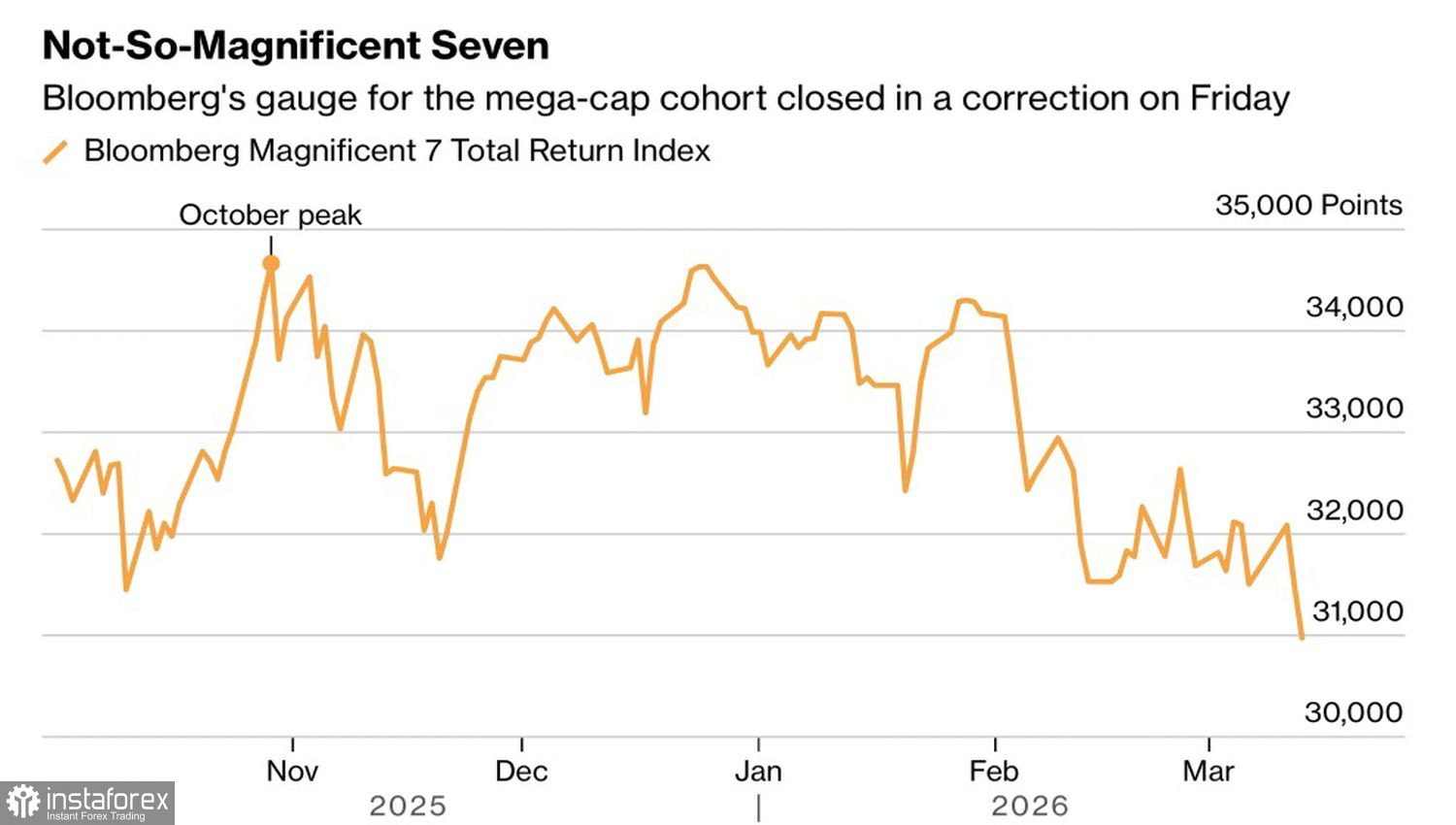
Rotting fish starts at the head. The first to step into correction territory were the Magnificent Seven. The sell?off in Big Tech began before the Middle East conflict, but rising oil prices and related worries about slowing US economic growth and contracting corporate profits have spread fear across the market. As a result, the S&P 500 has headed decisively lower.
Magnificent Seven stock market performance
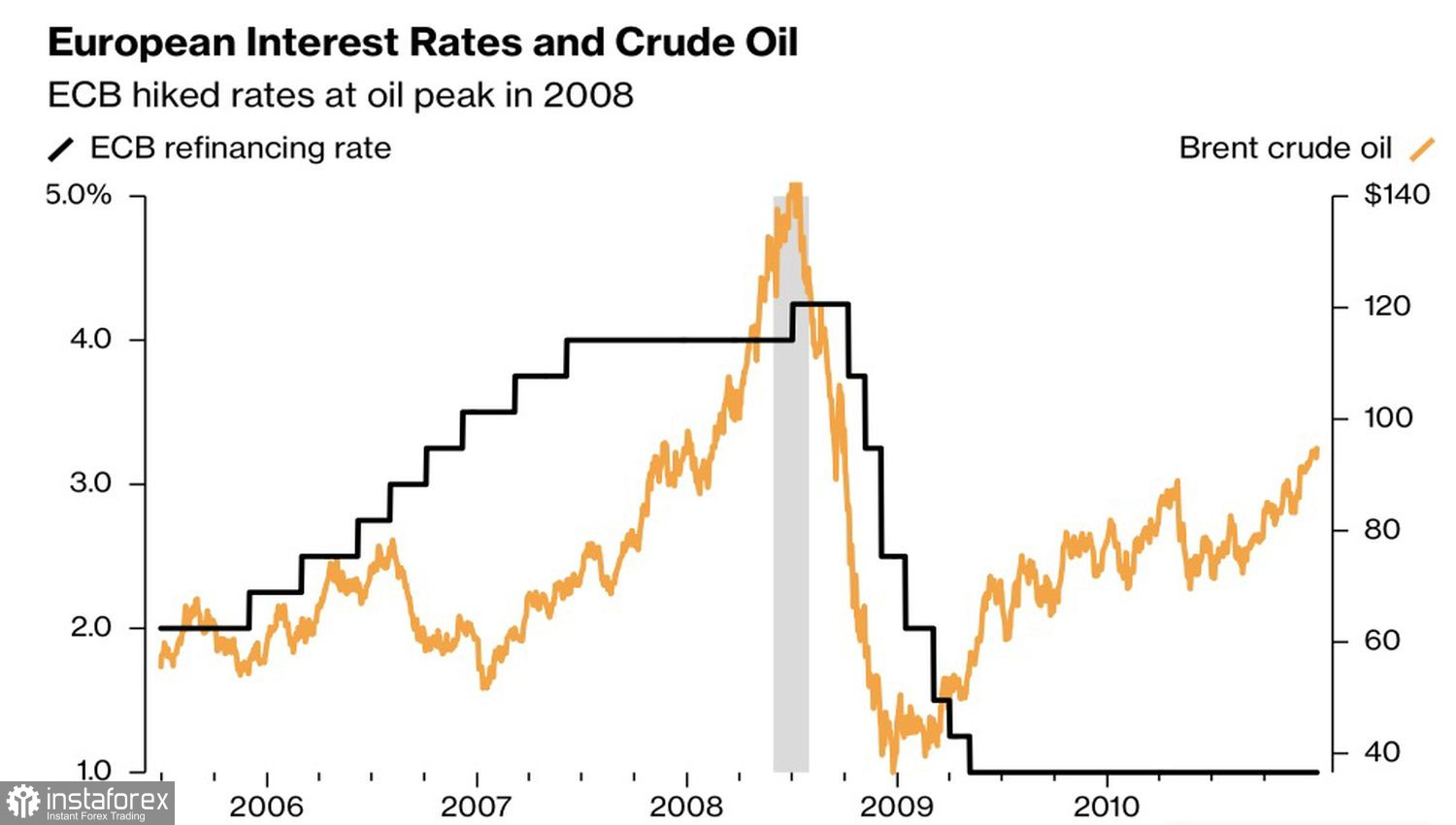
The second GDP revision for Q4 to 0.7%, a modest 0.1% rise in consumer spending, and an acceleration in core PCE — the Fed's preferred inflation gauge — to 0.4% all amplify stagflation fears. Bank of America draws parallels with 2007–2008, when Brent doubled from about $70 to $140/bbl and ultimately helped trigger a US recession and a collapse in US equity markets.
At that time, the ECB, in the bank's view, made the biggest policy mistake: it raised interest rates to fight rising inflation and then had to aggressively loosen policy after the economy turned down.
Oil and ECB rate dynamics
Today, other central banks face a similarly difficult position. The Federal Reserve is expected to grapple with two-way risks: inflation accelerating under the influence of oil prices while growth slows. In that situation, the Fed's hands could be tied, and keeping rates elevated for long could become a mistake comparable to the ECB's policy error nearly 20 years ago.
Meanwhile, Goldman Sachs warns that Brent could retest its 2007–2008 peak near $147.50/bbl if flows through the Strait of Hormuz remain shut through the end of March. There are no signs that the key oil artery will reopen. About 10m b/d of capacity is at risk, and IEA members' SPR releases can cover only roughly 3m b/d.
According to IFM Investors, even if the Middle East conflict ends today, oil prices are unlikely to fall below $70–80/bbl — still a negative for the US economy.
US President Donald Trump's attempt to throw the S&P 500 a lifeline by suggesting that Iran wants a deal achieved nothing. Tehran denied any talks; no negotiations with Washington are happening. The military confrontation in the Middle East continues — and the longer it lasts, the worse it will be for the broad index.
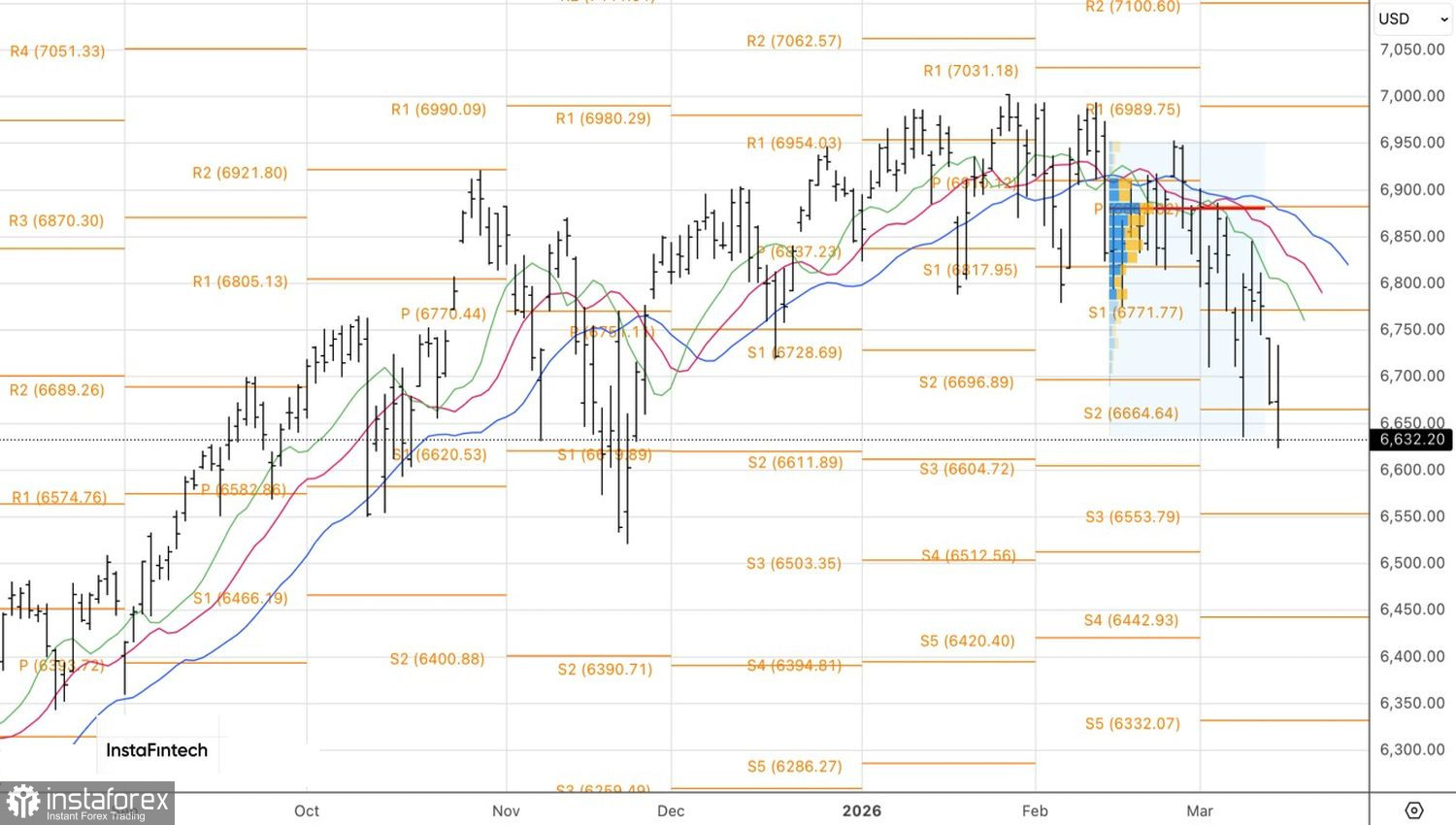
Technically, the S&P 500 shows a correction within the uptrend on the daily chart. The index hit a new local low at 6,635, increasing the risk of further downside toward 6,510 and 6,390. As long as the index trades below the pivot resistance level of 6,665, bears remain in control. Sticking with a sell strategy makes sense.


