
See also


 06.03.2026 09:49 AM
Man proposes, God disposes. Donald Trump has never hidden his wishes: a weaker dollar, lower yields, and higher stocks. Through the end of February, everything was running smoothly. The US dollar index fell sharply after the tariffs were introduced on America Liberation Day in April. Treasury yields dropped from 4.8% at the president's inauguration to below 4%, and the S&P 500 posted its third consecutive double-digit gain in 2025. Sadly, the armed conflict in the Middle East has turned that upside down.
Dynamics of Treasuries, the US dollar, oil, and the S&P 500
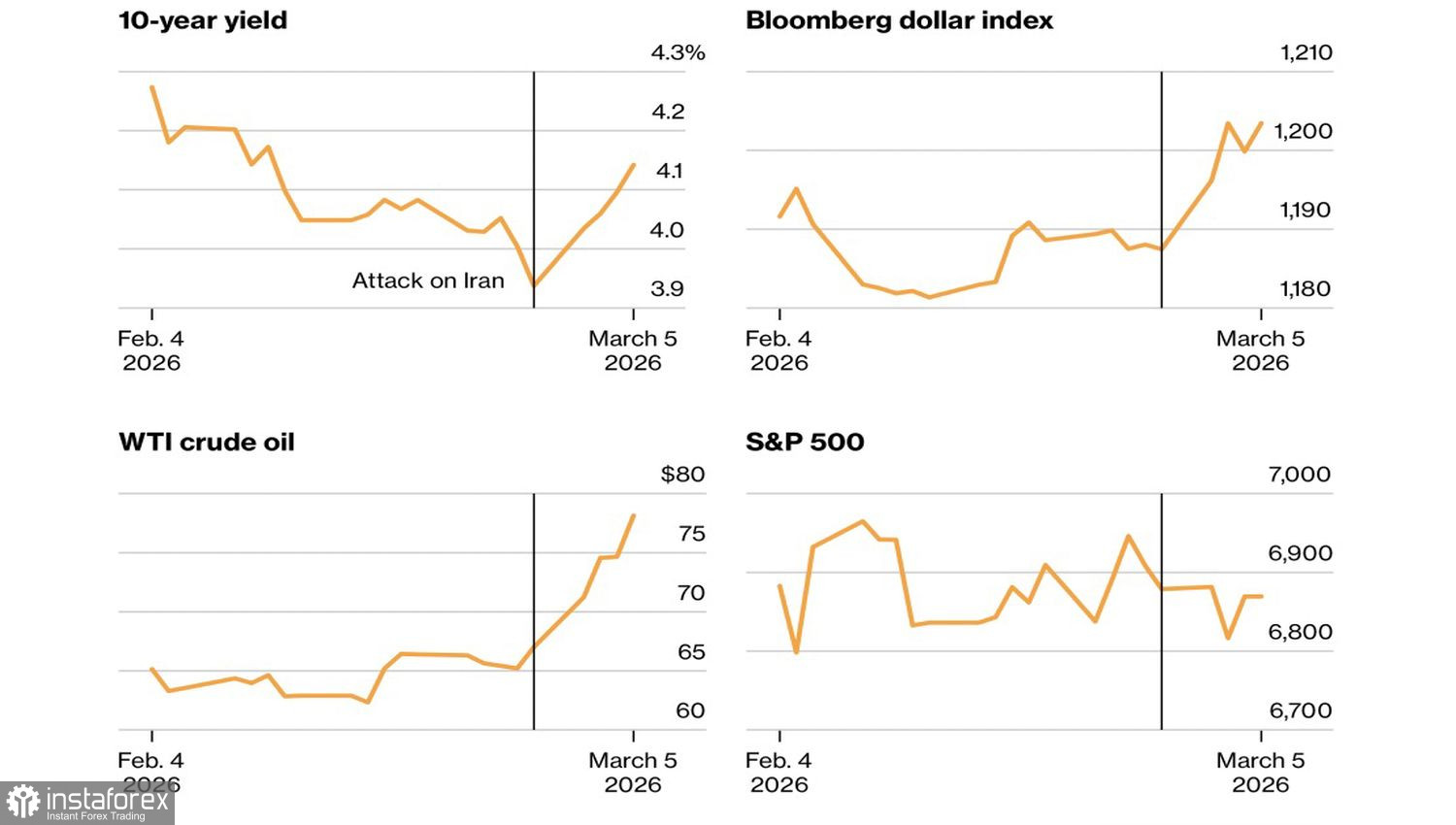
The US dollar has become the top safe-haven asset, and Treasury yields have risen on expectations of rising inflation and the Fed keeping the federal funds rate high for longer. Only the S&P 500 is trying to stay afloat, trading for months in a 6,800–7,000 consolidation band. The main reason appears to be investor confidence that the Middle East conflict will not be long-lasting. Markets are not yet pricing in the risk of a prolonged confrontation.
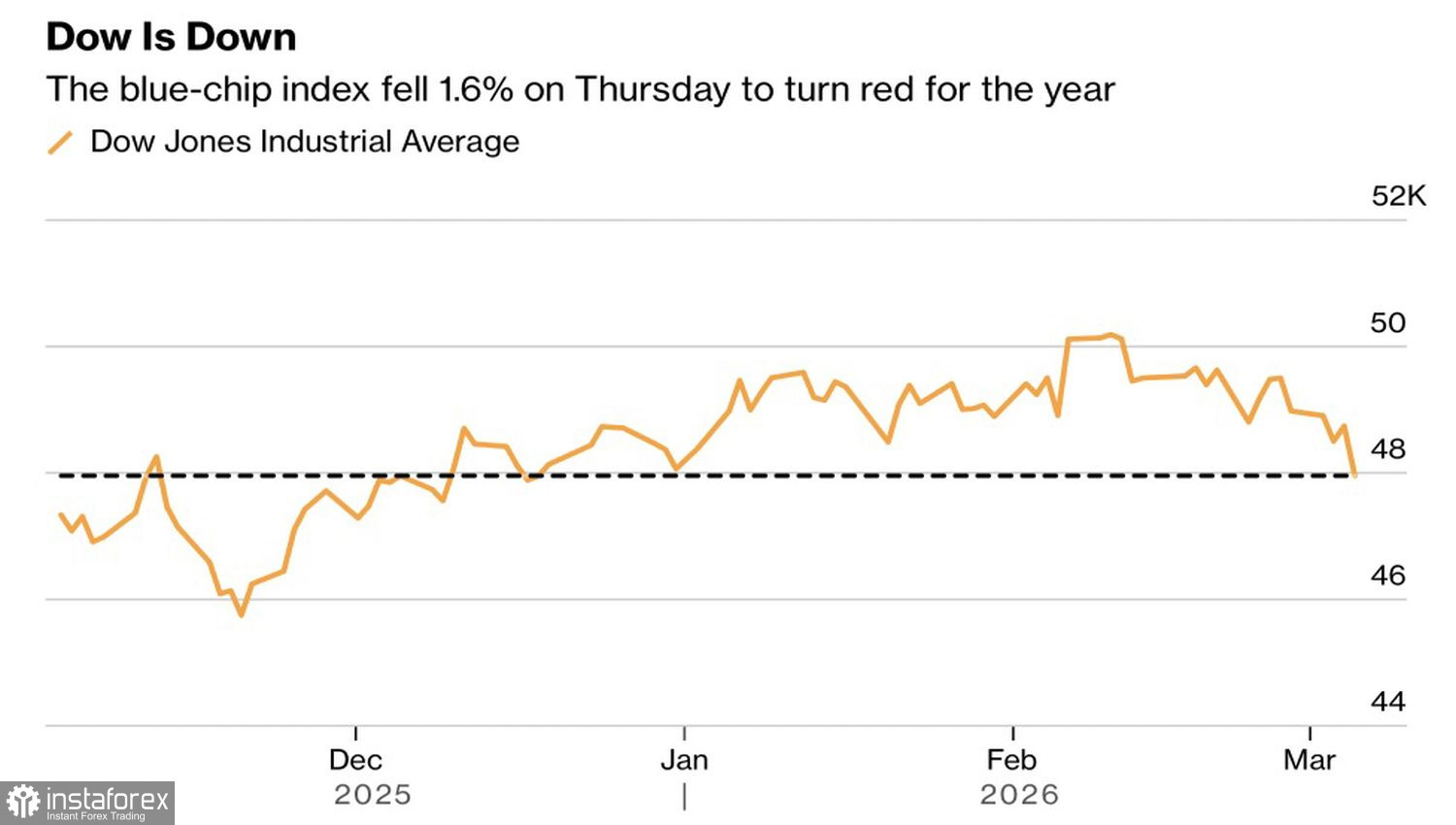
As a result, the biggest victims so far have been parts of the so?called old economy: the Dow Jones and small?cap Russell 2000 are underperforming the S&P 500 and Nasdaq Composite, whereas in January–February, the situation was the opposite.
Dow Jones index dynamics
However, the longer the armed conflict in the Middle East lingers, the higher oil prices will climb, and the greater the pain energy risks will inflict on the global economy. Investors are already doubting two Fed rate cuts in 2026. Expectations for further monetary easing could shift to September if February's nonfarm payrolls exceed forecasts.
Wall Street's consensus at the start of the year projected a 10% rise in the S&P 500 by the end of 2026, when the derivatives market was pricing in three easing moves. Investors have effectively lost one of their safety cushions. Fortunately, a second cushion remains — namely, Trump's support. Yes, the president's wishes don't always come true, but his intent to back the stock market persists.
The report that the US would consider extraordinary measures to curb rising oil prices acted as a rallying cry for S&P 500 bulls. The market crowd is eager to buy the dip. Retail investors largely ignore the bearish backdrop and are ready to pick up what looks cheap.
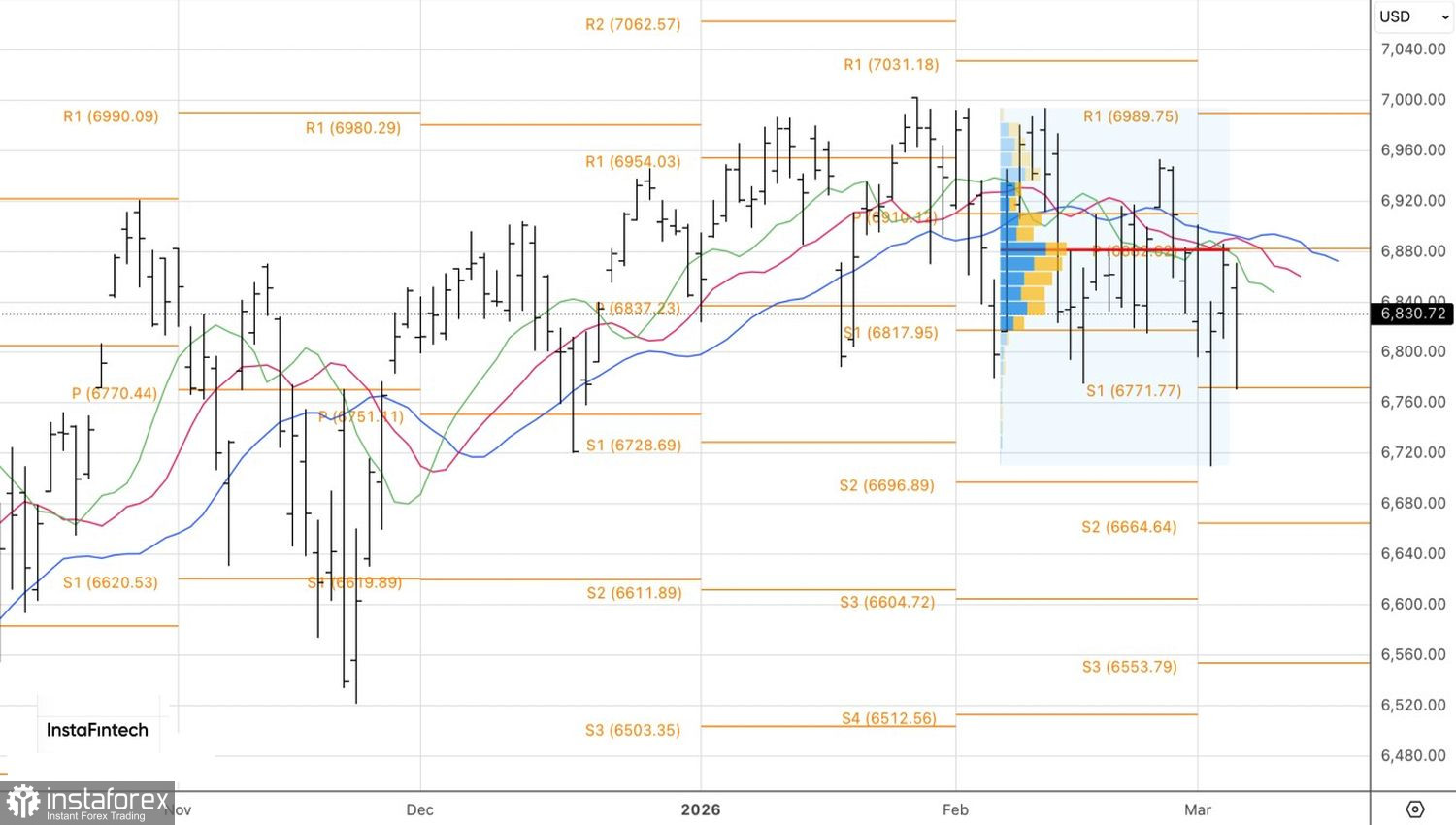
Technically, the daily chart of the S&P 500 shows another — the fourth in five weeks — false break below the lower band of the 6,800–7,000 consolidation range. Bulls are standing their ground. The formation of a new pin bar points to an entry for long positions at its high near 6,870. For longs opened from that level to be maintained, the broad index needs to secure itself above fair value at 6,885.


