
Vea también


 26.06.2026 12:53 AM
Who goes to the forest, who collects firewood? Japanese authorities vow to protect the yen with "bold actions," yet the louder the promises, the less the markets believe them. The USD/JPY pair is approaching its highest levels since 1986. Forex traders have heard this scenario many times before, especially the part where officials threaten intervention but take no action.
Chief Cabinet Secretary Minoru Kihara has confirmed the government's readiness to act if necessary. Finance Minister Suzuki Katayana stated that Tokyo and Washington share a solid understanding of their readiness to take bold steps and that coordination has become even stronger. Such rhetoric was heard back in April, when the intervention cost the treasury a record £11.73 trillion.
According to Morgan Stanley, selling USD/JPY can only temper speculative demand, but the effect will be short-lived. As long as the gap between real interest rates in the U.S. and Japan persists, the magic of currency intervention will not be sufficient to continuously hold back sellers. ING points to another risk—the reduction of Japanese investments in U.S. Treasury bonds in May. This may alarm Washington, forcing Tokyo to exercise greater patience before launching a new market attack.
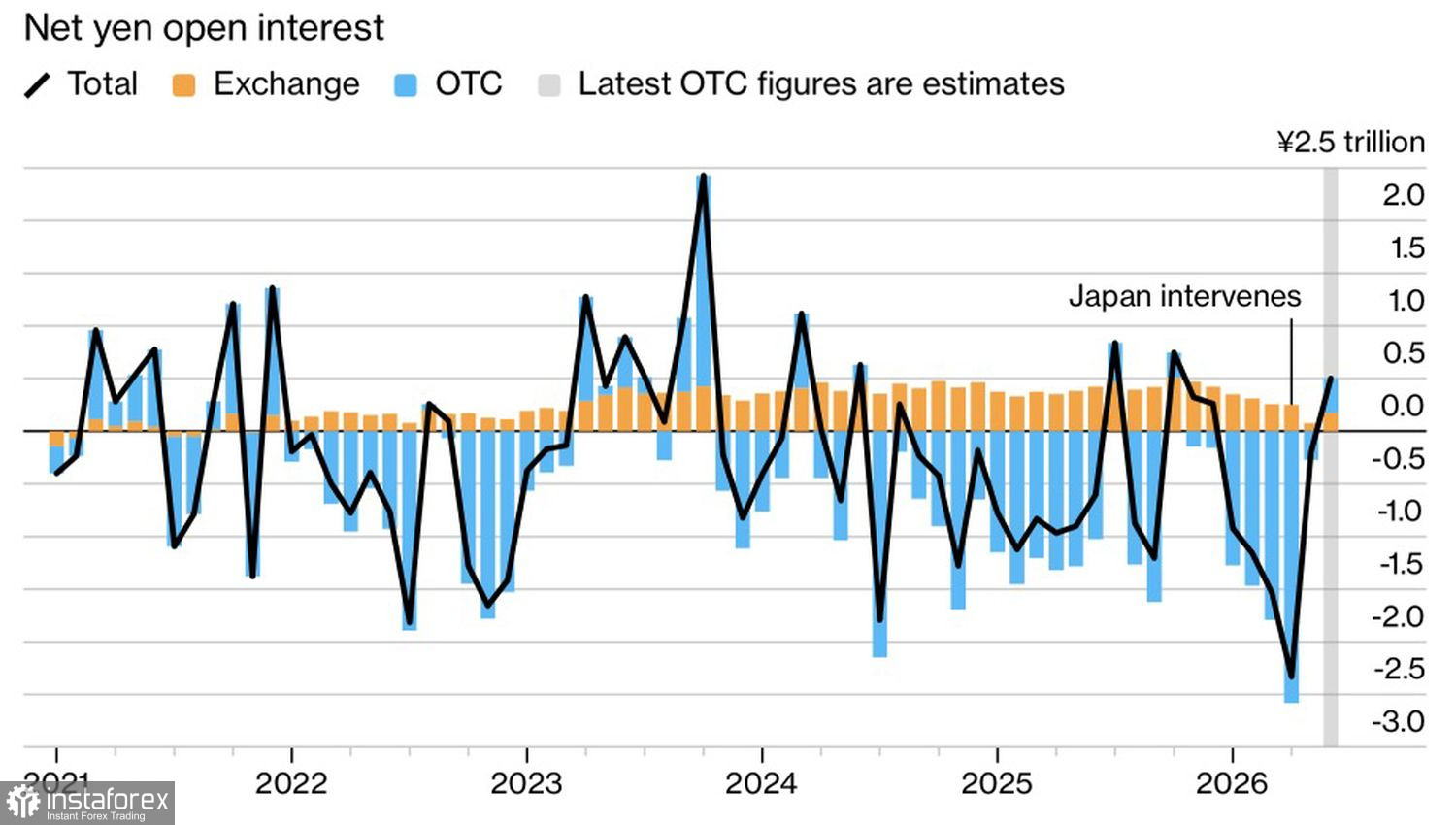
Unexpectedly, retail traders began to heed the government's warnings. According to Bloomberg, the net position of individual investors in the yen swung to a positive nearly £500 billion, while at the end of April, short positions reached £2.33 trillion—the highest level since late 2020. In contrast, professionals continue to bet on further weakness of the yen, creating a rare discord between the crowd and smart money.
However, the larger rift lies within Japan itself. Bank of Japan board member Naoki Tamura believes that core inflation has reached the 2% target and suggests raising rates by 25 basis points every few months—much faster than the market expects. Governor Kazuo Ueda echoed his colleague, stating that the Bank intends to continue its tightening cycle while maintaining accommodative financial conditions.
However, Prime Minister Sanae Takachi's government adheres to the opposite logic. According to the draft long-term economic plan, the cabinet intends to urge the central bank to align its decisions with Takachi's goal of supporting private demand. Essentially, Tokyo is asking for cheap money precisely at a time when the BOJ is preparing to raise its cost.
This creates a vicious circle: the more the central bank hints at higher rates, the less incentive the government has to assist the yen with interventions that could slow the USD/JPY rally. As the currency weakens, political pressure on the BOJ increases. Who will concede in this dispute first?
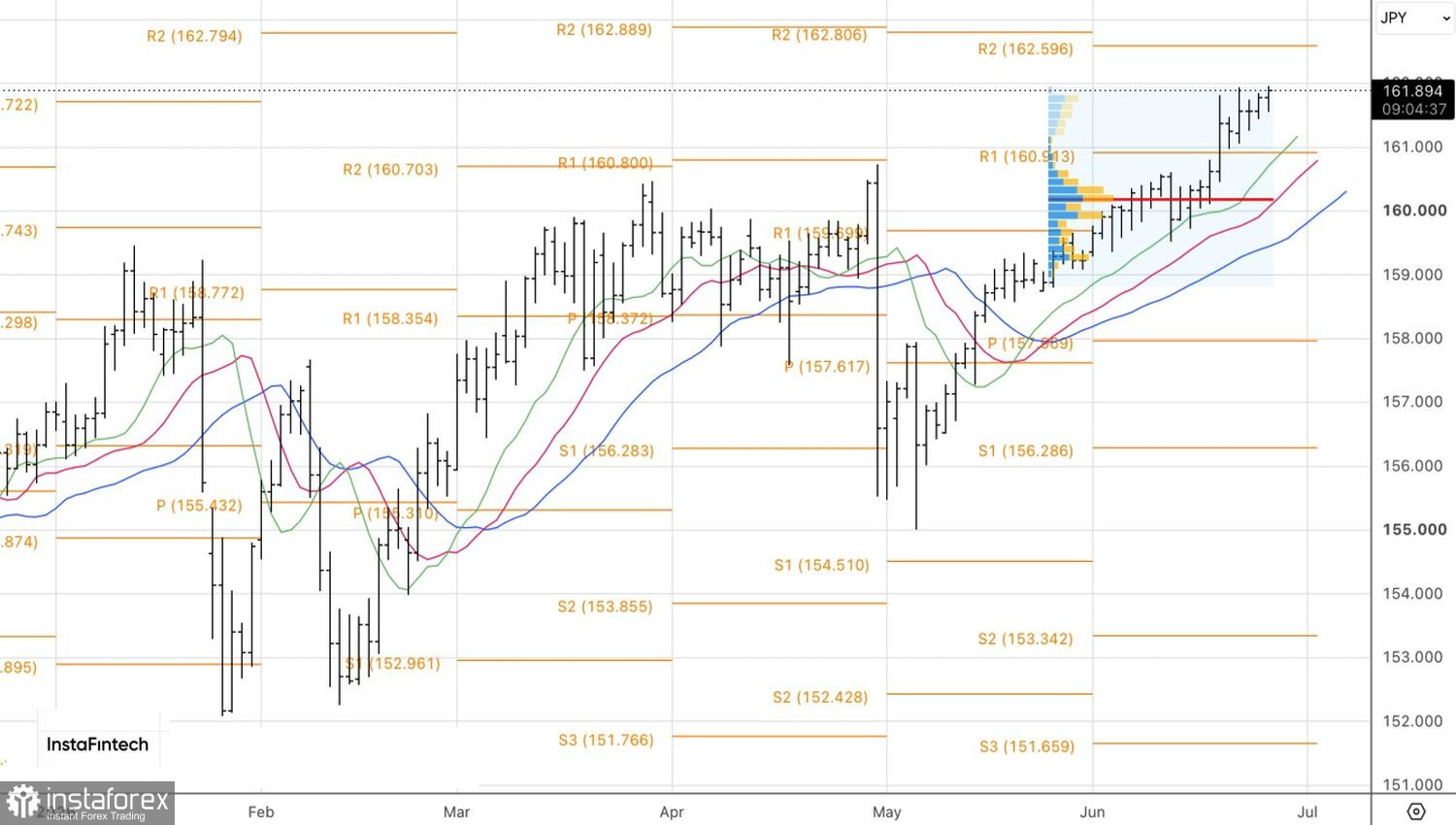
From a technical perspective, the USD/JPY daily chart shows a sustainable upward trend. While prices hold above 161, the focus should remain on buying.


