
Veja também


 30.06.2026 01:17 AM
Dogecoin (DOGE) is a decentralized open-source cryptocurrency that was initially created as a humorous alternative to Bitcoin. Over time, it has transformed into a fully-fledged digital currency with an active community and a wide range of applications.
Dogecoin (DOGE) was created in December 2013 by two software engineers—Billy Markus from IBM and Jackson Palmer from Adobe. The project was initially conceived as a parody of Bitcoin and the rapidly growing cryptocurrency market, with its symbol being the popular internet meme dog breed Shiba Inu. Despite its humorous origins, Dogecoin quickly gained a dedicated community and has since evolved into a significant digital asset, consistently ranking in the top 10 cryptocurrencies by market capitalization.
Dogecoin operates on its own blockchain, which is a fork of Litecoin that uses the Scrypt proof-of-work algorithm. The network generates new blocks approximately every minute, significantly faster than Bitcoin (which takes 10 minutes), allowing for quicker transaction confirmations. The network's throughput is about 30-40 transactions per second, with extremely low fees (averaging around $0.01-0.06 per transaction), making DOGE a convenient tool for micropayments and everyday transactions.
A fundamental difference between Dogecoin and many other cryptocurrencies, including Bitcoin, is its issuance model. DOGE does not have a hard cap on the maximum supply. Every year, a fixed reward of 5 billion new DOGE is issued to miners. With a current circulation of approximately 155–168 billion DOGE, this corresponds to an annual inflation rate of about 3–4%. The creators of the coin initially designed this mechanism to encourage the use of DOGE for daily transactions rather than as a store of value, in contrast to Bitcoin's deflationary model. As noted by the director of the Dogecoin Foundation, "Dogecoin is made for spending, not for saving."
Despite its humorous origin, an active ecosystem has formed around Dogecoin with real applications:
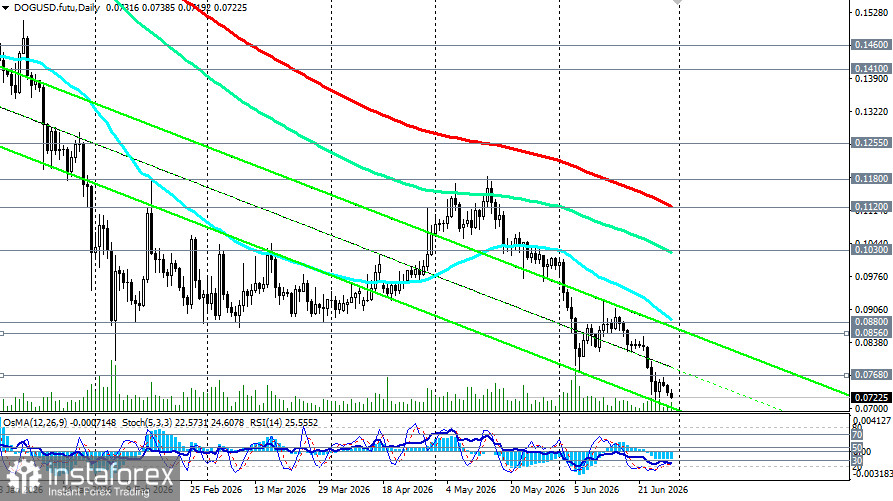
As of late June 2026, the DOG/USD pair continues to face pressure, consolidating near the key support zone of 0.0700–0.0730 after a prolonged decline lasting more than six weeks. Since the drop below 0.0850 in early June, the bearish trend remains dominant, and investors are cautiously assessing the possibility of a reversal amid extremely oversold conditions and ongoing risk-off sentiment in the cryptocurrency market.
The macroeconomic backdrop remains bearish: the hawkish Federal Reserve policy and a strong dollar continue to exert pressure on risk assets, and the MEME sector remains the most vulnerable.


