
Veja também


 06.04.2026 11:14 AM
On the hourly chart, the GBP/USD pair continued trading on Friday around the 1.3177–1.3199 level. There was no clear rebound or breakout of this zone, and trader activity dropped to minimal levels ahead of Easter. A consolidation of quotes below the 1.3177–1.3199 level would allow for expectations of a continued decline toward the next Fibonacci level of 161.8% at 1.3016. A rebound from the 1.3177–1.3199 level would favor the pound and some growth toward the resistance level of 1.3341–1.3352.
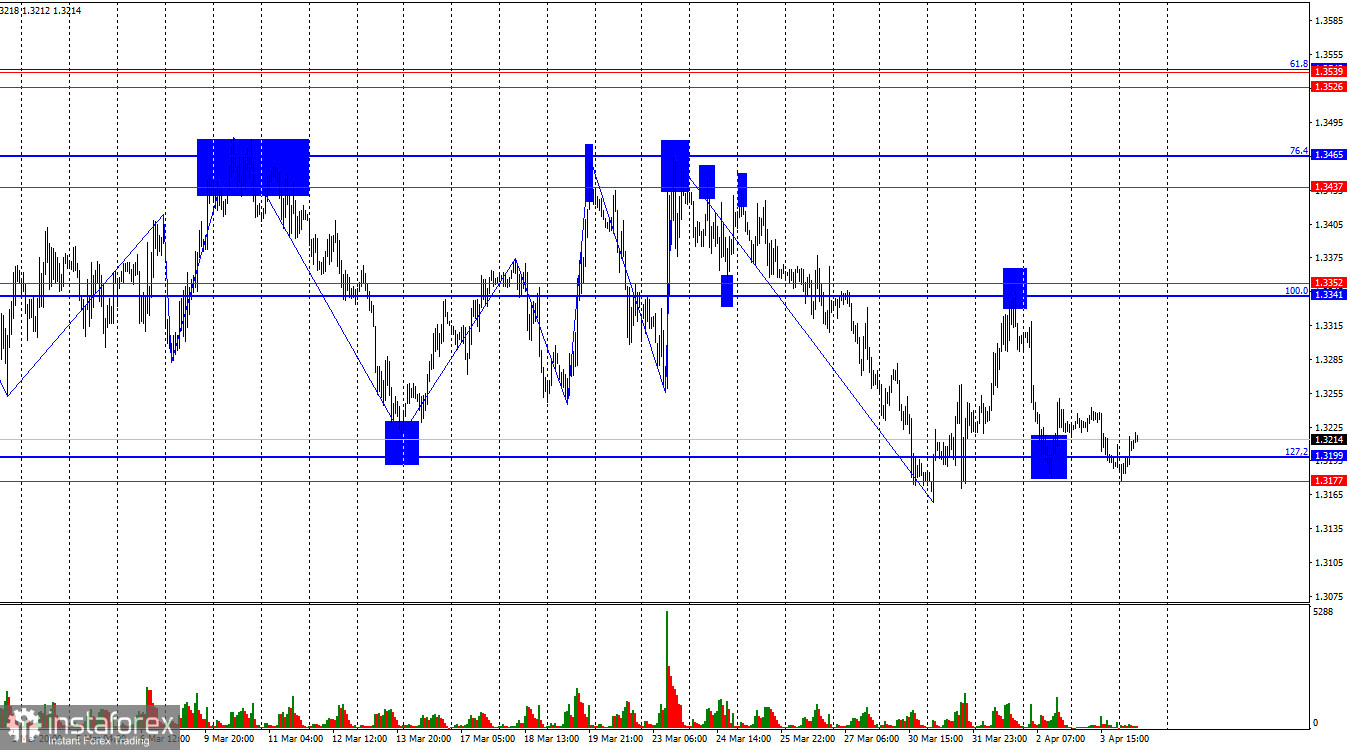
The wave situation has once again shifted to "bearish." The last completed upward wave exceeded the previous peak by only a few pips, while the last downward wave confidently broke the previous low. The news background remains weak for the pound, and geopolitics provides bears with almost complete dominance in the market. The war in Iran remains the main reason for the strengthening of the US currency in recent months. Bulls can only hope for the end of the war in the Middle East, a drop in oil prices, and a ceasefire by all parties involved.
The news on Friday once again supported the bears, but they chose not to take advantage of this opportunity in the form of strong US labor market and unemployment data. Over the weekend, Donald Trump confirmed his intention to strike Iran's energy infrastructure and other targets if Tehran does not reopen the Strait of Hormuz. Since the Strait of Hormuz remains blocked at the moment, traders are expecting a new escalation of the conflict. In this case, bears may launch a new offensive and continue to ignore economic data. Today, the US ISM Services PMI for March will be released. If Donald Trump does not carry out a new strike on Iran, traders may react to this report, as well as Friday's labor market and unemployment data, which were likely ignored due to Easter. Thus, I expect active movements during the US trading session on Monday.
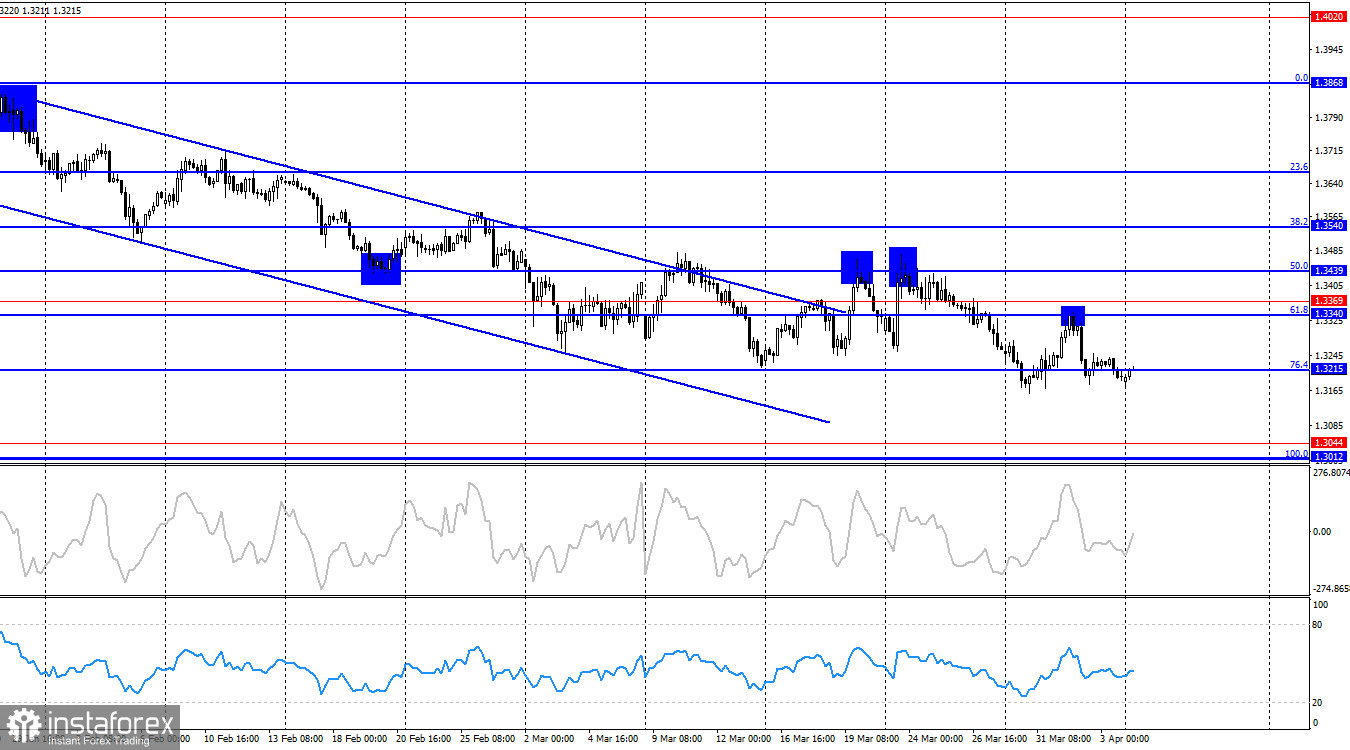
On the 4-hour chart, the pair consolidated above the descending trend channel, which gave the bulls absolutely nothing. A rebound from the 61.8% corrective level at 1.3340 occurred, followed by a reversal in favor of the US dollar and the start of a new decline. A consolidation below the 76.4% Fibonacci level at 1.3215 will increase the probability of further decline toward the 1.3044 level. No emerging divergences are observed in any indicators today.
Commitments of Traders (COT) report:
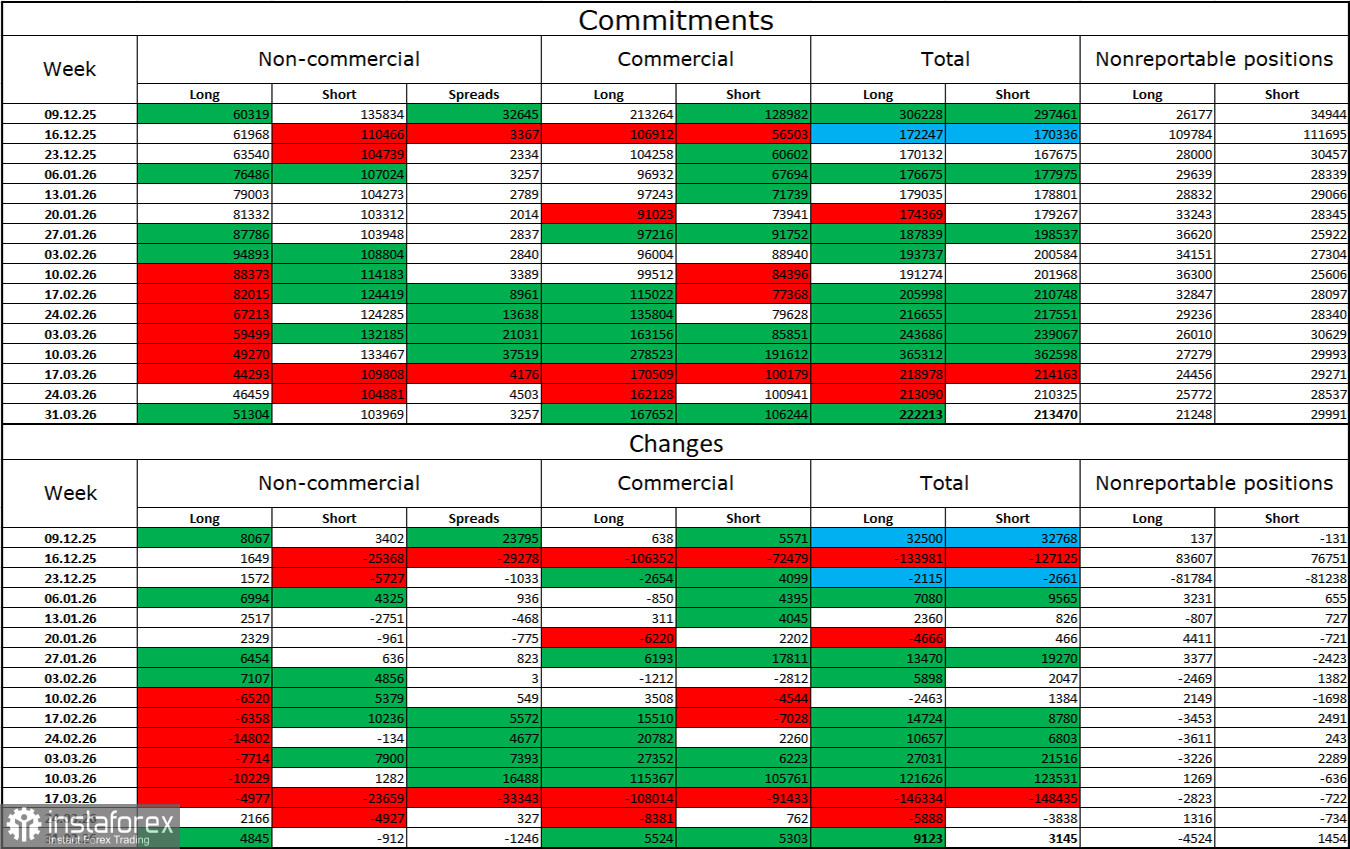
The sentiment of the "Non-commercial" trader category became slightly less bearish over the past reporting week. The number of long positions held by speculators increased by 4,845, while short positions decreased by 912. The gap between long and short positions is now effectively 51,000 versus 104,000. For six consecutive weeks, non-commercial traders have been actively increasing short positions and reducing longs, leading to a strong imbalance between long and short positions. In recent weeks, bears have dominated, which raises no questions given the geopolitical situation. I still do not believe in a sustained bearish trend for the pound, but now everything depends not on economic indicators, Trump's trade policy, or central bank monetary policy, but on the duration, scale, and consequences of the war in the Middle East. In recent months, a correction began while the bullish trend was still intact, and then the Middle East conflict started escalating almost daily. Geopolitics remains the sole driver of the US dollar's strength.
News calendar for the US and the UK:
The April 6 economic calendar contains one important entry. The impact of the news background on market sentiment may be present on Monday, but mainly in the second half of the day.
GBP/USD forecast and trading tips:
Selling the pair is possible today if it consolidates below the 1.3177–1.3199 level on the hourly chart, targeting 1.3016. Buying is possible if there is a rebound from the 1.3177–1.3199 level, targeting 1.3341–1.3352.
Fibonacci levels are built from 1.3341–1.3866 on the hourly chart and from 1.3012–1.3868 on the 4-hour chart.


