
यह भी देखें


 25.08.2026 09:59 AM
The calm before the storm is deceptive: while US stock indices are treading water, a storm is already gathering on the horizon. The start of the last full week of August confirmed that.
Nvidia dynamics
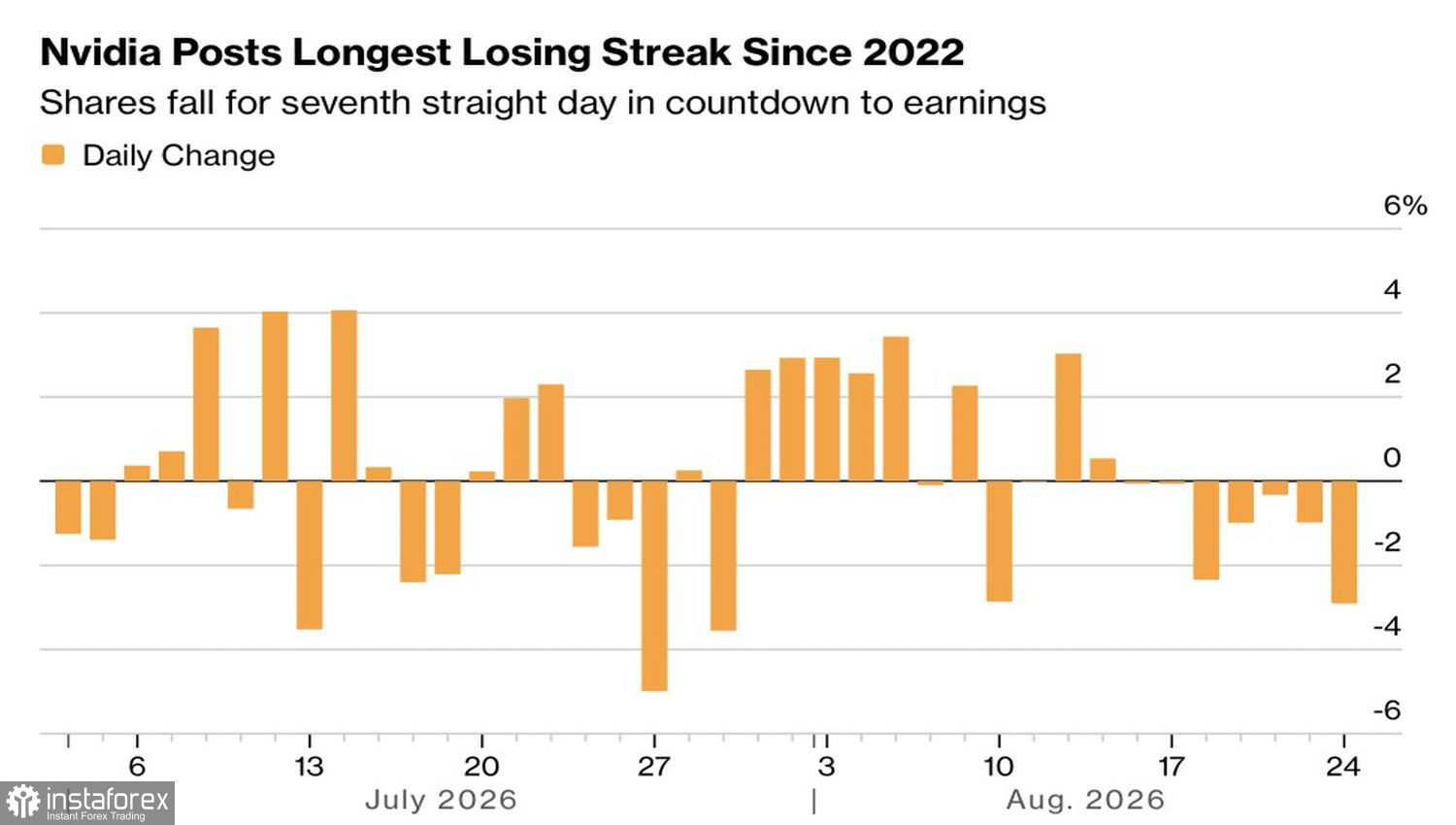
The S&P 500 and Nasdaq 100 slipped, while only the industrial Dow Jones remained in positive territory. Chipmakers were the main culprits: the AI sector continued its uneven path ahead of Nvidia's earnings on Wednesday. The company's shares fell for the seventh straight day — the longest losing streak since 2022, down roughly 7.5% over the period. Nvidia is the most active stock in both the S&P 500 and the Nasdaq 100 today. Its decline alone cost the Dow Jones nearly 37 points.
The market barely reacted to the geopolitical noise. The US Treasury announced sanctions against more than 60 companies and individuals linked to Iran, calling it an "economic D?day." According to Rystad Energy, the rhetoric was much louder than the substance. This is not a new economic weapon but an expansion of an existing regime of restrictions.
Meanwhile, Donald Trump promised to impose 50% tariffs on Canadian cars starting in January, and Prime Minister Mark Carney threatened a mirror response. Still, as JonesTrading says, traders have grown out of being scared by such headlines. Big proclamations too often get reversed, and the market prefers to ignore them.
S&P 500 and oil dynamics
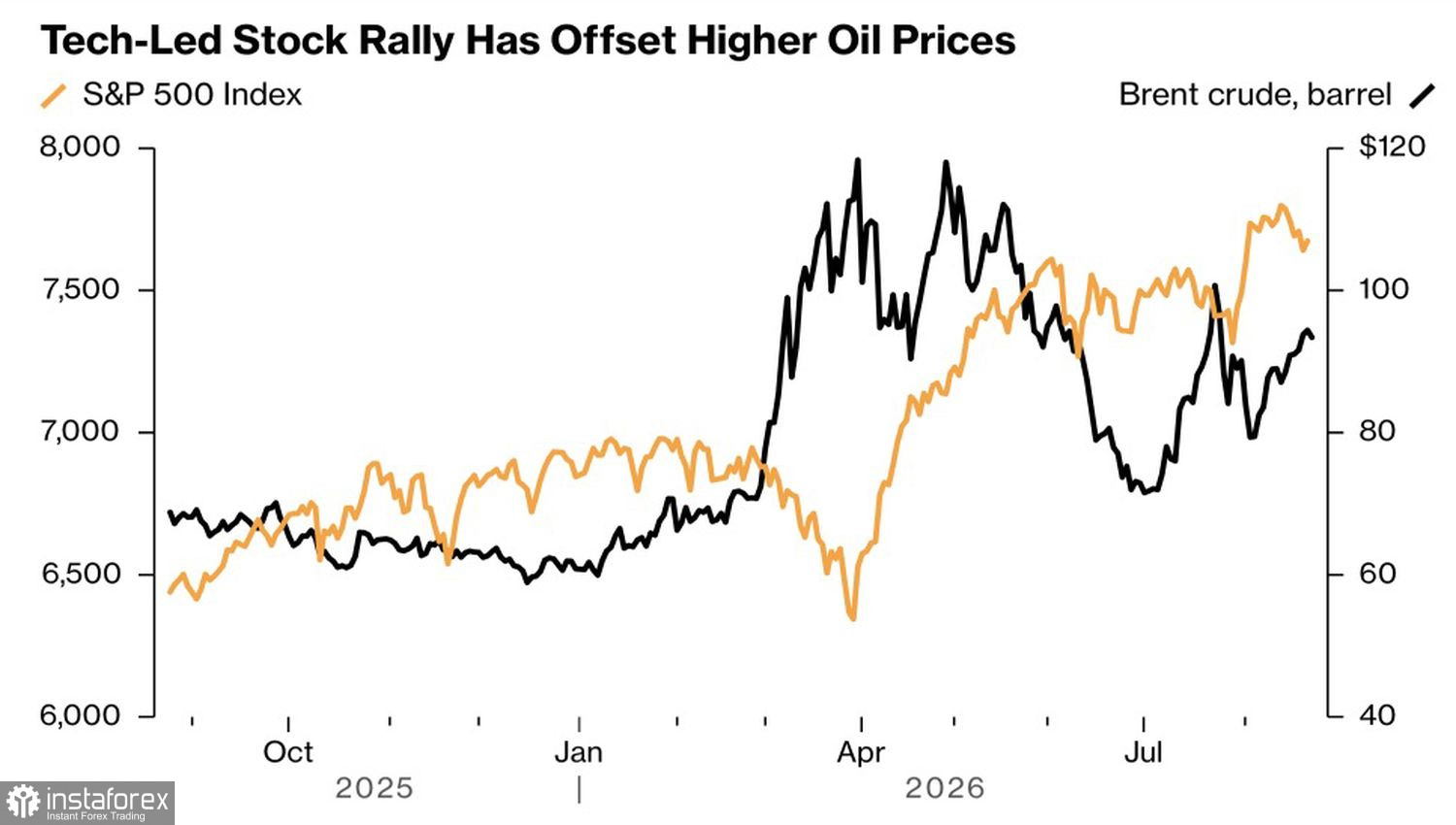
The real risk for stocks is not tariffs but the barrel. Brent has risen by roughly 30% since early July and is trading above $90 amid the Middle East conflict. Morgan Stanley sees the oil rally as the main threat to US stocks: another jump in oil prices would push up Treasury yields and force the Fed to act more aggressively than the market wants. The bank underscores an asymmetry — stocks lose more from expensive Brent than they gain from cheap oil — and recommends the energy sector as a hedge.
So, investors are watching two indicators: the Brent barrel and Nvidia's report. The first will determine the trajectory of rates; the second will determine the fate of the whole AI?tech rally. The 30?year Treasury yield has already approached 20?year highs, forcing the Treasury to ramp up debt buybacks. That's a sign the bond market is more nervous than the stock market.
There is visible divergence within the S&P 500: the semiconductor sector is losing altitude while the broad index is being kept afloat by cyclicals and energy. Such desynchronization rarely lasts — sooner or later chips and the broader market start moving in the same direction again.
Can the S&P 500 withstand a simultaneous hit from both sides, or will the illusion of calm evaporate by Wednesday evening?
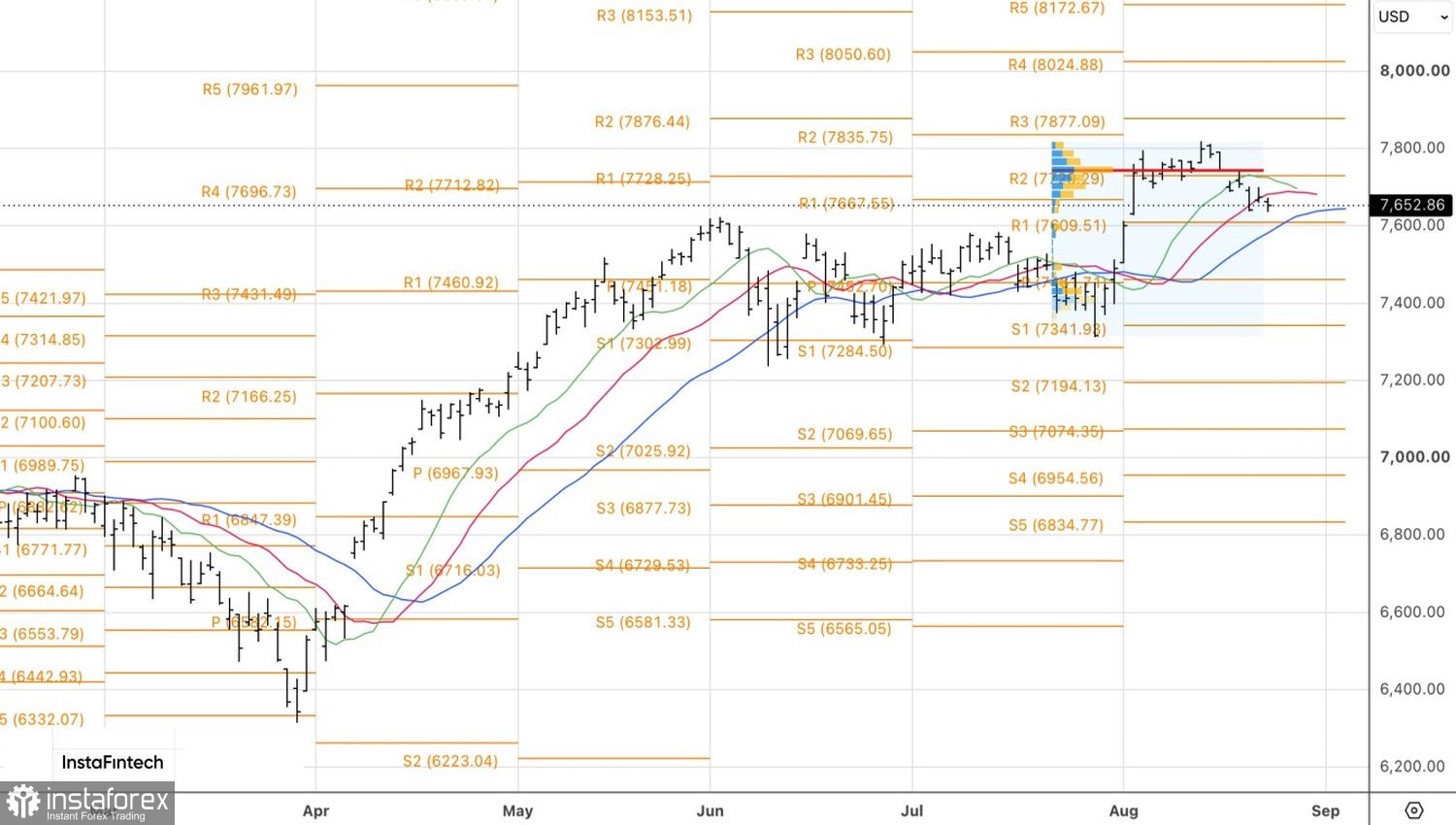
Technically, an inside bar played out on the S&P 500 daily chart, which allowed investors to increase short positions from the 7,655 level. As a result, the risks of a correction to 7,545 and 7,465 are rising.

