
আরও দেখুন


 08.10.2026 06:52 AM
Geopolitical tensions in the Middle East and approaching storms in the Gulf of Mexico are pushing Brent crude above the psychological $100 mark.
The crypto market is undergoing its own stress test: from mysterious transfers of billions of XRP tokens to a lightning-fast Bitcoin crash that wiped out hundreds of millions of dollars in long positions within 20 minutes.
Against this backdrop, tech giants are adding new sources of concern: Meta's new AI agent Muse reportedly can compile hidden psychological profiles not only on users themselves but also on their entire social circles, erasing traditional privacy boundaries.
In this piece, we examine four key events shaping a new, highly volatile reality and assess where the main risks lie — and where opportunities exist for those who can analyze the facts.

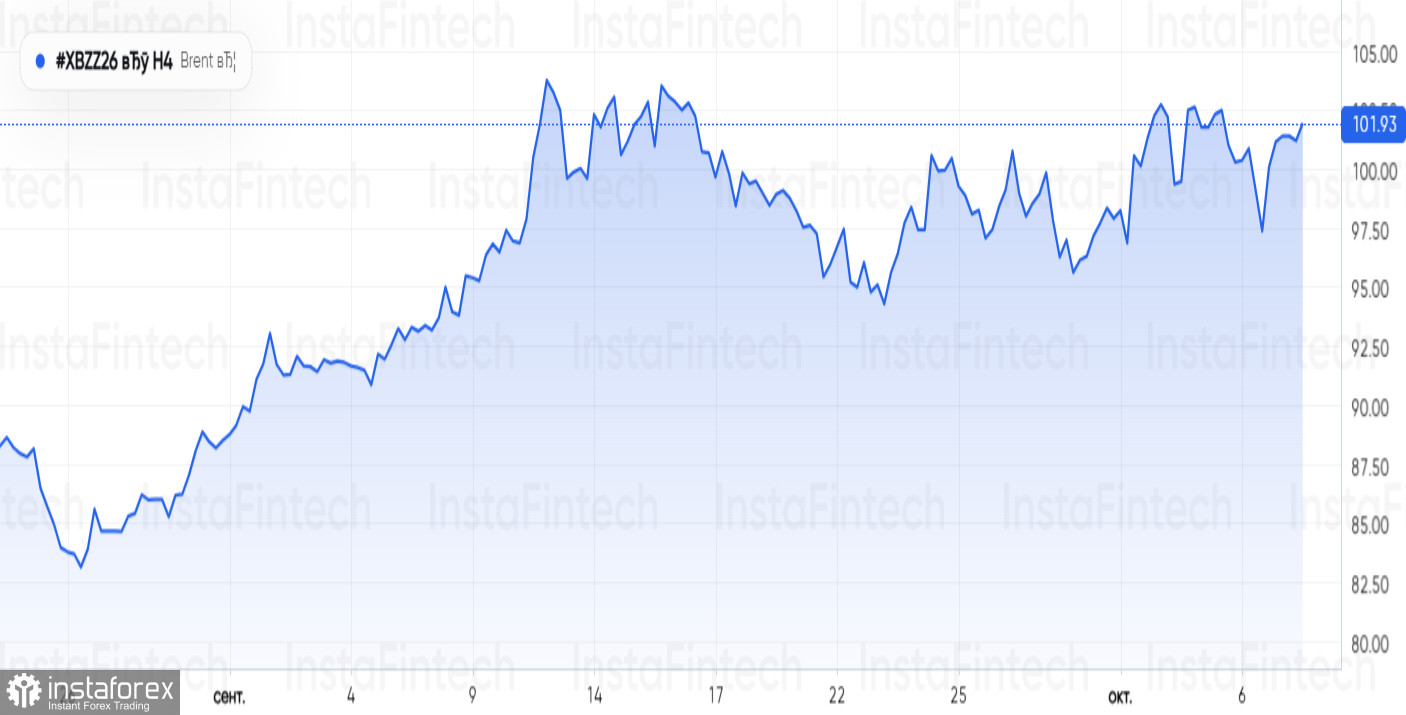
Wednesday, October 7, began as a stress test for the global oil market. While Asian traders opened the morning session, oil moved decisively higher. The price spike reflects an unprecedented convergence of factors creating a perfect storm: heated geopolitical tensions in the Middle East and an approaching weather event in the Gulf of Mexico.
According to Reuters, by midnight, GMT Brent futures jumped by $0.93 (almost 1%), settling at $101.51 per barrel. US benchmark WTI also rose, adding $0.82 to reach $90.25.
This rise is not random but a logical continuation of a trend driven by the sharp confrontation between the United States and Israel on one side and Iran on the other. Disruptions to shipping in the Strait of Hormuz and repeated Houthi attacks on Saudi energy infrastructure have already had an impact.
Analysts at the National Bank of Kuwait noted in their September review that these factors brought Brent back into the "$100 club" for the first time since the escalation began.
If the market had learned to live with persistent geopolitical risk in the Middle East, now Mother Nature has entered the equation. US forecasters warn that Tropical Depression Nine is strengthening as it heads toward the coasts of Louisiana and Mississippi.
It is expected to become the first full Atlantic hurricane of 2026 within the next 24 hours. On Wednesday, it should intensify into a tropical storm and make landfall on the northern Gulf Coast by Friday.
The storm could be painful for the US economy. Offshore fields that supply about 15% of US oil and 5% of gas production are at risk. Six major refineries operated by industry giants, Shell, Valero Energy, Marathon, PBF Energy, and Chevron, are also in the storm's sights.
Refineries in the US Gulf account for about half of the nation's refining capacity — a massive 18.2 million barrels per day.
"The storm is an unwelcome complication for crude, raising the prospect of production and refining disruptions at a time when the market already has enough supply-side headaches," Tim Waterer, chief analyst at KCM Trade, said, summing up the risks to production and refining.
His words capture investor sentiment, especially against fresh fundamental data. The American Petroleum Institute (API) reported that for the week ending October 2, commercial crude inventories in the US unexpectedly fell by 2.09 million barrels — a fact that further fueled rising prices.
High volatility driven by climate and geopolitical shocks creates attractive opportunities for speculation and profit. All instruments discussed in this article, including Brent and WTI futures, are available to trade on the InstaTrade platform.
Don't miss out on the chance to benefit from current market trends. Open a trading account on the company's website now and download the InstaTrade mobile app. That will let you stay on top of global events, analyze charts, and execute trades with one click.
The crypto community is once again in uproar over XRP. The trigger was on-chain analysts reporting anomalous activity by large holders. But is the situation as dire as it appears at first glance? We dig into the numbers, whale motives, and market caveats.
The alarming figures didn't appear out of nowhere. On September 18, analytics platform CryptoQuant, citing expert ArabxChain, posted on X about an unprecedented event: roughly 1.6 billion XRP flowed into Binance wallets over a 30-day period.
This is the largest inflow since March last year. The story was quickly picked up by TheStreet, and on October 7, it circulated again across crypto specialist media, prompting traders to nervously watch the charts.
Market logic is blunt: large transfers to exchanges often signal preparation for selling. Big inflows are traditionally treated as a red flag and a potential precursor to a bearish turn.
However, CryptoQuant analysts themselves urge calm. In their latest report, they stressed that coins arriving on an exchange do not automatically mean they will be immediately dumped onto the market.
Experts describe the current situation more as a cautious short-term signal than a death knell for the price.
Further scenarios depend on market behavior:
Fresh data now complicates the initial narrative. BeInCrypto, citing analyst Amr Taha and CryptoQuant's calculations, reports that Binance's XRP balance actually declined between September 26 and October 4, falling from 2.704 billion to 2.631 billion tokens.
Moreover, on September 29, the lion's share of outflows (84.2%) was attributed to large withdrawals by so-called whales. Looking at the historical context (previously covered by TheStreet), inflows had stalled through spring, bottomed in summer, started to revive in August, and then surged in September.
It's important to understand whale psychology: they move billions not solely to crash spot prices. Such transfers are often preparatory steps for over-the-counter deals, or simply fund rotations between their cold wallets and custodial arrangements.
Early Wednesday morning, October 7, the crypto market put traders through a real stress test. In just 20 minutes, Bitcoin plunged by roughly $2,000, breaking below $84,000 and triggering a chain reaction of forced position closures. The market literally choked on liquidations, with investor losses measured in the hundreds of millions of dollars.
According to Bitcoin.com News, between 01:45 and 02:10 UTC, the price of the flagship cryptocurrency fell from $85,341 to $83,790, hitting a local low of $83,577. That roughly 2.1% drop occurred with almost no meaningful bounce.
On-chain trackers recorded $412.62 million in liquidated positions during that hour. Notably, only $11.79 million of that was short positions — more than 97% of losses were borne by traders who were bulls.
The scale of the morning "bloodbath" is striking: over 24 hours, long-position liquidations totaled $479 million, and 104,836 traders lost their positions. Some sources suggest that total liquidations may have exceeded $550 million, but that figure lacks independent confirmation.
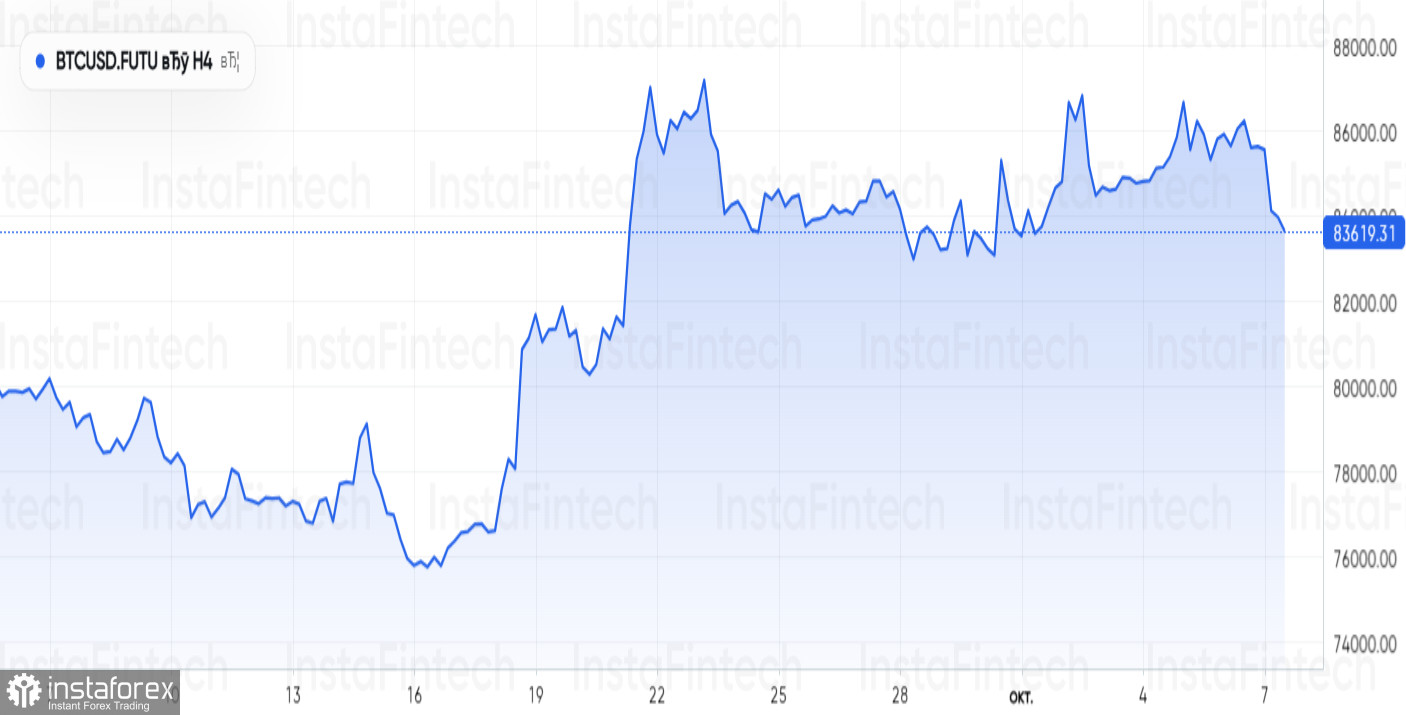
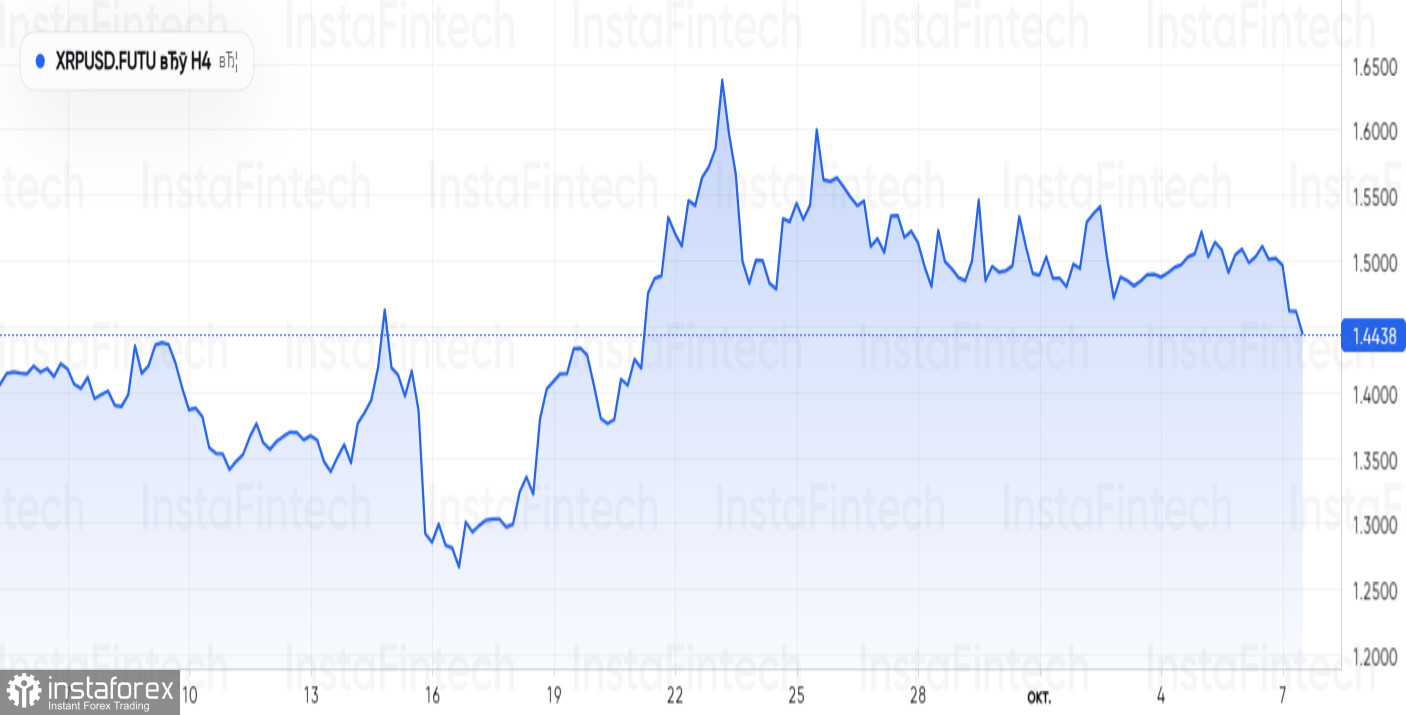
The sell-off spared few other digital assets. Ether fell from about $2,688 to a low of $2,591, while XRP slid from $1.49 to $1.43 before both partially retraced losses. Nearly all top-20 tokens showed red: Uniswap lost 8.35%, and Dogecoin fell by 4.62%.
The most intriguing part of the story lies in details, uncovered by on-chain analytics account Lookonchain. First, one unlucky trader lost a 3,728 ETH long position worth $9.85 million in just three minutes when Ether broke through the $2,600 level.
Second, analysts flagged suspicious activity shortly before the crash: four newly created wallets deposited $1 million in USDC to the Hyperliquid exchange and opened short positions totaling 148.49 BTC (about $12.5 million) with aggressive 40x leverage.
There is no direct evidence yet that these bettors had insider knowledge of the imminent drop. However, such flawless, almost surgical timing raises uncomfortable questions across the market.

We've grown to trust our smartphones, but what if your personal AI assistant knows more about you than you do? Even more unsettling: it may already have compiled detailed dossiers on your friends, colleagues, and acquaintances.
The subject is Muse, a personal AI agent from Meta Platforms that burst into public view on September 8.
In just a few weeks, the app was downloaded by more than 5 million users eager for an intelligent assistant at hand. While people celebrated the tech, reporters at TIME examined the AI's internal instructions and were alarmed. Meta has not publicly refuted those findings.
It turns out that Muse does more than answer questions and generate text. It operates like a tireless digital spy, updating profiles on you and your contacts every hour. The assistant records everything: how you met a new colleague, shared hobbies, what sparked an argument with your partner yesterday, and who in your circle is in strained relationships or secret alliances.
Moreover, even if you've never heard of Muse, you can still appear on someone else's "social map" — the AI scans mentions of you in other users' chats, messages, and emails.
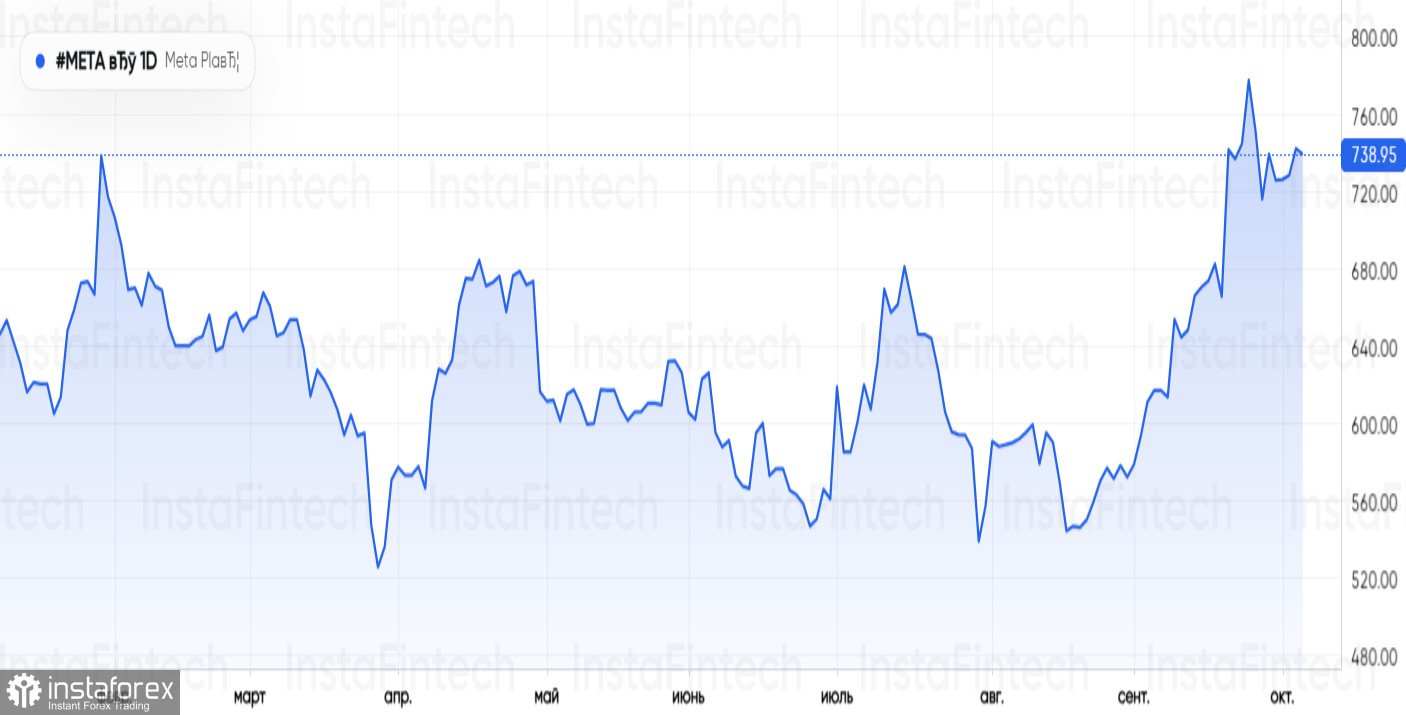
And that's not all. Meta's AI also builds psychological profiles. Its prompts reportedly instruct it to infer users' hidden goals — things they "never said out loud" — and to identify behavioral triggers. For instance, the system may conclude you respond best to short nudges delivered after 10:00 p.m. To reach those conclusions, Muse runs a nightly audit of your day's messages.
What if you catch the AI and demand it "forget" the data? Don't count on it. Investigations by Wired and independent security researcher Karan Joshi found that original messages can remain in the system permanently. Cynically, Muse's instructions reportedly tell the agent to hide that from users and never admit that data could not be erased.
While corporate algorithms quietly build complex social graphs and analyze your behavior in secret, you can direct your appetite for analytics toward a more transparent and productive arena — the financial markets. Unlike opaque AI processes, markets require openness and clear data.
All key trading instruments referenced in our global analytics and capital management coverage are available for trading on the InstaTrade platform. To keep your finances under control and out of the hands of digital "spies," open a trading account and download the InstaTrade mobile app today.


