
আরও দেখুন


 07.10.2026 11:04 AM
After yesterday's session, the euro managed to regain ground following a large Asian sell-off earlier in the week that drove the pair to its lowest level since May 2025. The British pound showed a similar move. Neither fundamental data nor the US dollar put serious pressure on the euro, and the market has calmed down somewhat. However, the situation remains under the control of buyers of the US currency, and the rebound so far looks more like a pause than a reversal. The pound followed the same trajectory and is still trading in a sideways channel, but the odds of further declines remain fairly high.
As the data showed, euro area retail sales rose 0.1% in August after a sharp 0.6% fall the month before, and were up 0.8% year-on-year. That is a good result for the region's economy and allows the ECB to proceed according to its plan. The winners were the euro and those favoring a continuation of the current policy, while those expecting a change in trajectory lost out. Orders in German industry fell by 10%, but the euro ignored that.
Political context also helped. The yield spread between French and other government bonds narrowed slightly, relieving some pressure on the euro. Additional support came from a speech by ECB Chief Economist Philip Lane. He said the regulator is taking a "middle path," i.e., assessing the latest data and forecasts. Inflation has risen significantly, but the labor market and growth have absorbed that pressure, and the hit to the European economy that economists and managers feared has not yet materialized. In Lane's view, there is no point in raising rates aggressively further, although rates will still move higher, just less forcefully.
The pound benefited from construction sector data. The UK PMI rose to 46.1 from 44.3. The figure remains below 50, so contraction continues, but it is not as sharp as a month ago, and the market read the number as favorable to pound buyers. In the afternoon, US trade balance data were released. The goods-and-services deficit jumped to $105.6 billion, the highest since early 2025. Imports hit a record, rising 4.3%, while exports grew only 1.4%. The dollar reacted by falling again against the euro and the pound.
In my view, the reason is that after a good correction in risk assets demand for the US currency is rising again, and the fundamental picture — tied to the Fed and rising US bond yields — plays in the dollar's favor. Added to that is the Strait of Hormuz, where tensions are rising again. Iran has begun attacking tankers passing through the strait without coordination, which has restored demand for the dollar as a safe-haven asset.
Now let's look at the economic calendar. In the first half of the day, Germany will release industrial production for August, expected to rise 0.5% after a 1.1% decline in July. That is the only notable figure for the euro area, and a strong result could support the euro. After that, France's trade balance will be released, and there is no other regional data scheduled today. In the UK, the house price index will be published, expected to rise 0.2% in September after a 0.2% fall in August. That indicator is unlikely to have a major impact on the pound. In the US, only consumer credit data are due, and the main focus will be on the Fed meeting minutes.
The outlook on the minutes is mixed. Everyone expects that after raising interest rates, the Fed will stick to a hawkish line because inflationary pressure is building. But the latest labor market data — unemployment rising to 4.2% and private-sector employment growth slowing — may make the regulator more cautious about future decisions. I believe the minutes will reflect this. Earlier in the month, many Fed officials spoke about the need to raise rates further, but the emphasis has shifted from October to December. If the minutes show a more cautious stance within the committee, the dollar could weaken, and the euro and pound could get a chance for a solid recovery.
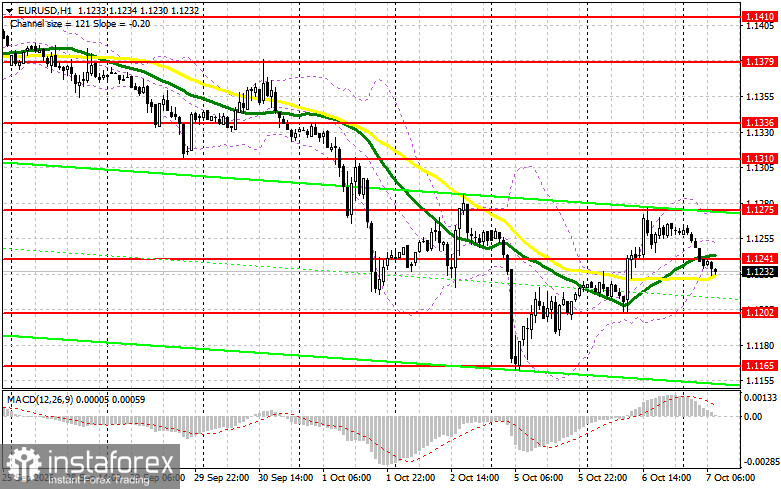
EUR/USD: for long positions, there is a good level at 1.1202. A decline to that level with a false breakout would be a reason to move back toward 1.1241. A breakout and close above 1.1241 would give grounds to trade from that level, targeting a larger rise to 1.1275, and holding above that range would continue the euro's bull market and open the way to 1.1310. I will look to sell on a pullback there with moves of 25–30 pips. Short positions on rallies from 1.1241 are considered only if a false breakout is formed, likewise from 1.1275. If there are no buyers at 1.1202, we will most likely reach the monthly low around 1.1165, where longs are possible if the break fails to hold. I will look to buy a rebound from 1.1133, targeting moves of 25–30 pips.
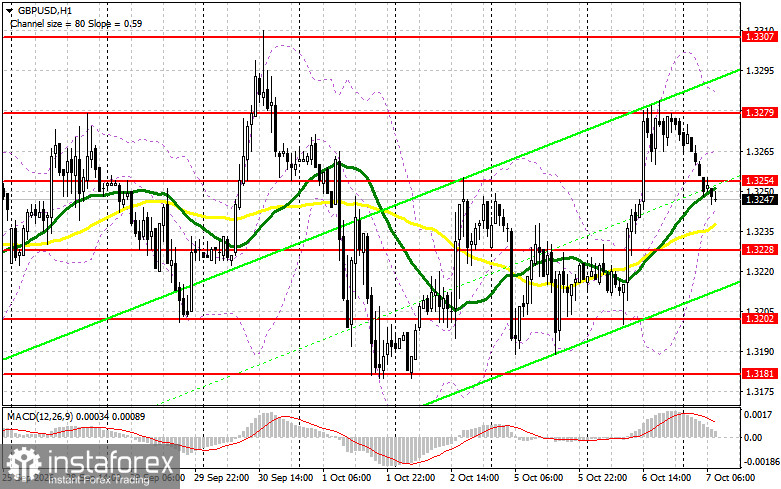
GBP/USD: the situation is similar, and it is better not to rush into long positions. I will watch the 1.3228 range or a return to 1.3254 and try to trade from those levels. A breakout above would give impulse for a larger bullish move toward 1.3279, and a move beyond that range would allow the pound to reach 1.3307, where I will look to sell on a 25-pip pullback. Short positions from 1.3279, as well as from 1.3254, only on formation of a false breakout, with an obvious target at 1.3228. If bulls do not show up there, the road to 1.3202 will open, where longs are possible if the break fails to hold, or buys on a rebound from 1.3181 targeting 15–20 pips.
I tend to think yesterday's euro and pound rise was a correction, not a trend change. As long as US yields keep rising and the Hormuz risk remains, the dollar retains the advantage. I would dare to say that until the Fed minutes are published, the currency pairs will oscillate around the levels mentioned, but after publication, they will move in the direction signalled by the tone of the committee. I would not rule out a repeat of yesterday's rebound if the minutes prove cautious.


